.svg)

.png)

.svg)
.svg)

The Governance Gap in Enterprise AI Development
Every major enterprise adopted AI coding tools in 2024. Most are now sitting on a governance problem they didn’t anticipate.
72% of CIOs report they’re breaking even or losing money on their AI investments, according to Gartner’s October 2025 survey of 506 CIOs. The technology works. The governance doesn’t.
What “Shadow AI” Actually Costs Engineering Teams
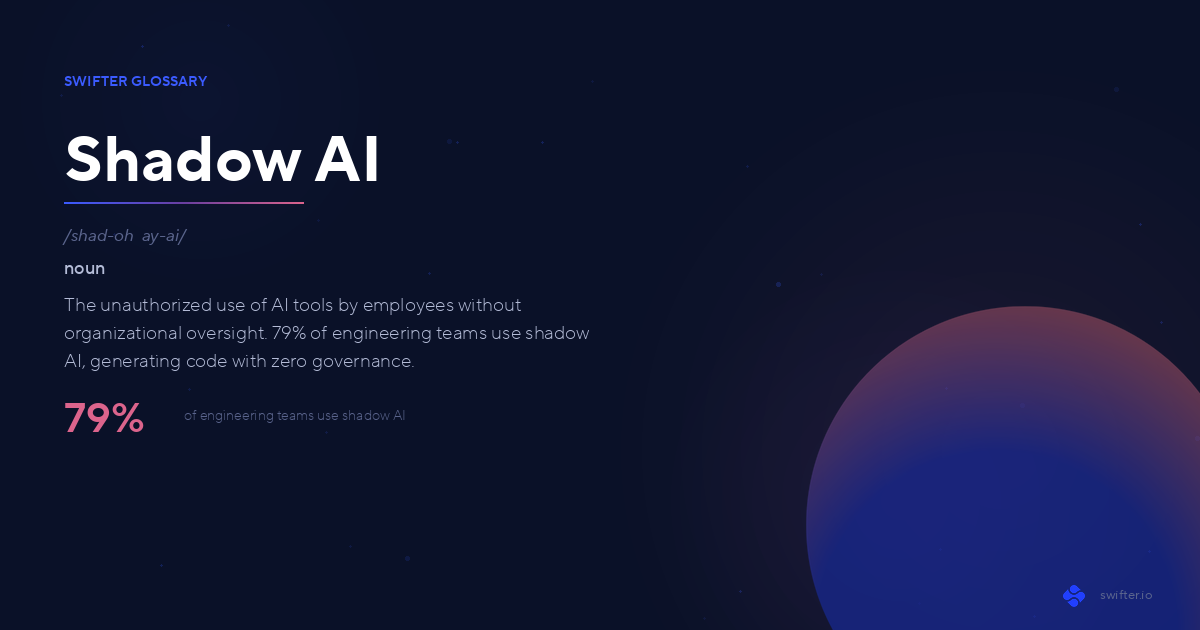
69% of CISOs suspect employees are using prohibited AI tools. In engineering, the numbers are worse: 79% of engineering teams use shadow AI — tools outside sanctioned platforms, running on personal accounts, with no visibility into what code is being generated or what data is being exposed.
This isn’t a policy problem. It’s a structural problem. When every developer has access to powerful AI tools and no governed workflow to channel that power, shadow AI is the natural outcome.
Why Code Assistants Don’t Solve the Governance Problem
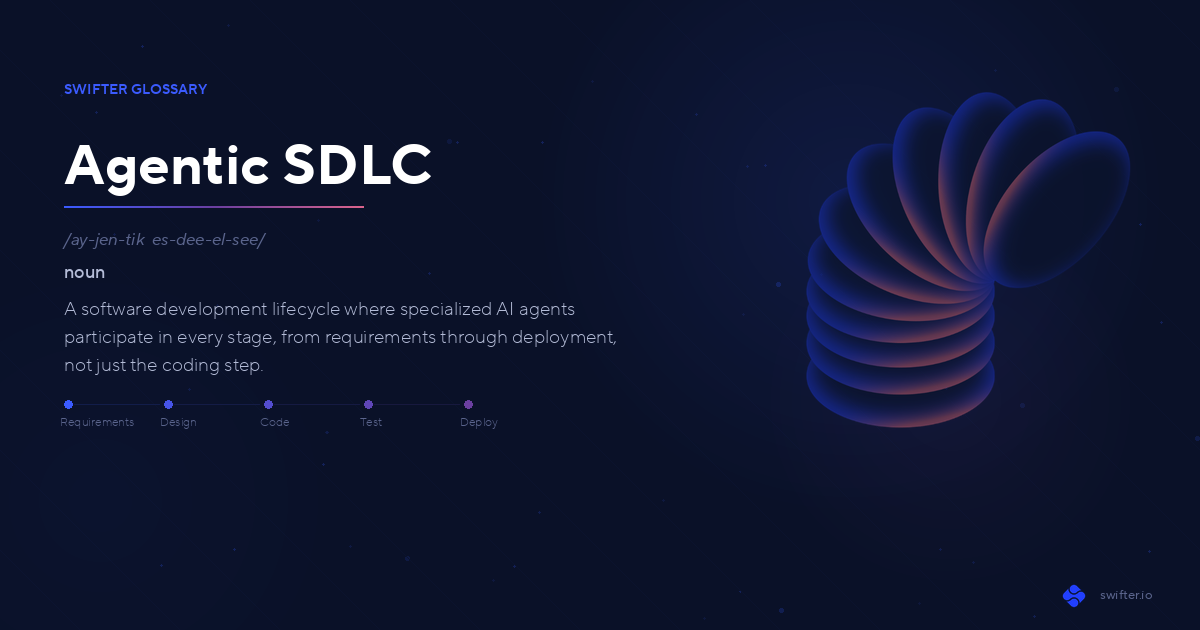
General-purpose AI coding tools operate at a single step in the SDLC: the coding step. They have no visibility into what came before (requirements, specs, design decisions) and no connection to what comes after (testing, review, deployment, compliance).
That’s not a failure of the tools. It’s a category limitation. Code assistants are point solutions. Governance requires a platform.
Gartner projects that 50% of AI agent deployment failures will be caused by insufficient governance. The failure mode isn’t technical — it’s architectural. Organizations deploying AI agents without a governance layer are building on sand.
What AI Governance for Engineering Teams Actually Looks Like
Real AI governance for engineering teams has four components:
1. Consistent workflows. Every developer, every team, every project follows the same AI-assisted process — not because of a policy mandate, but because the platform enforces it structurally.
2. Full traceability. Every line of code traces back to a business requirement. Every AI-generated output is attributable, auditable, and explainable.
3. Centralized oversight. Engineering leadership has visibility into how AI is being used across the entire organization — what’s being built, by which agents, against which specifications.
4. Compliance by design. Regulatory requirements — EU AI Act, SOC 2, ISO 27001, or industry-specific mandates — are embedded in the governed workflow, not bolted on after the fact.
The Productivity Case for Governance
Governance doesn’t slow engineering teams down. The evidence shows the opposite.
Code-only AI tools deliver roughly 10% productivity gains. Teams that govern AI across the full SDLC — from requirements through testing and delivery — achieve 25–30% gains. That’s a 3x multiplier, not a productivity tax.
The reason is handovers. The most expensive friction in software delivery isn’t writing code — it’s the handovers between stages: analyst to designer, designer to developer, developer to QA. Governed AI platforms eliminate that friction by maintaining context across the entire workflow.
How Swifter Delivers AI Governance Across the Full SDLC
Swifter is the agentic engineering platform built for enterprise AI governance. Not a coding assistant. A full SDLC platform with role-specific AI agents — Analyst Agent, Developer Agent, Testing Agent — that follow governed, pre-built workflows from business requirement to deployed application.
Every output is traceable. Every agent follows a consistent process. Every team uses the same governance framework — whether they’re building greenfield applications or modernizing 20-year-old legacy systems.
Your engineering teams are already using AI. The question is whether they’re using it the same way, with the same standards, producing the same quality. Swifter makes that possible.



.svg)

.svg)
.svg)


