.svg)

.png)

.svg)
.svg)

69% of CISOs suspect their engineering teams use prohibited AI tools. AI governance is how you fix that.
Your developers are using AI. The question is whether anyone knows which tools, how they are being used, and what code is being generated. For most enterprises, the answer is no.
AI governance in software development is the emerging discipline that addresses this, and it is quickly becoming a board-level priority.
Definition: What is AI governance in software development?
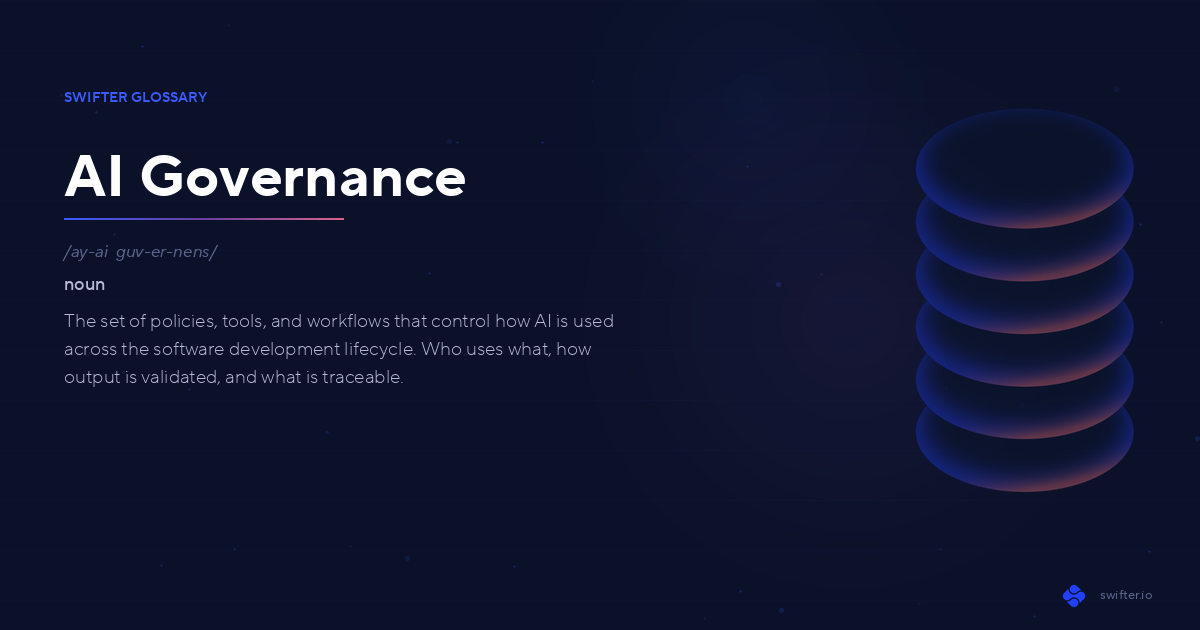
AI governance in software development is the set of policies, tools, and workflows that control how AI is used across the software development lifecycle. It covers which AI tools are approved, how AI-generated output is validated, who has access, and whether every change is traceable back to a business requirement.
It is not about banning AI tools. It is about making them safe, consistent, and auditable at enterprise scale.
Why it matters now
Without governance, every developer prompts differently, output is inconsistent, and there is no audit trail. The numbers tell the story:
- 51% of enterprises have already had a negative incident from ungoverned AI use (McKinsey, Jun 2025)
- 50% of AI agent deployment failures will be caused by insufficient governance (Gartner, Mar 2026)
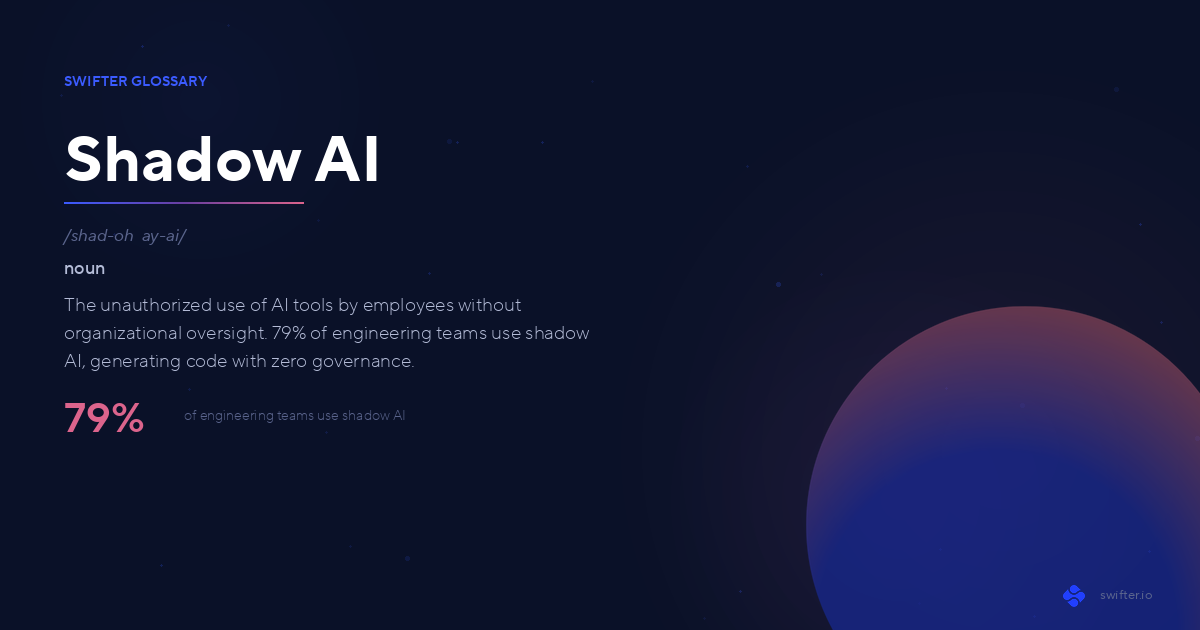
- 79% of engineering teams use shadow AI tools with zero oversight (Second Talent, 2026)
For regulated industries like financial services, insurance, and healthcare, the compliance implications are severe.
How Swifter handles AI governance
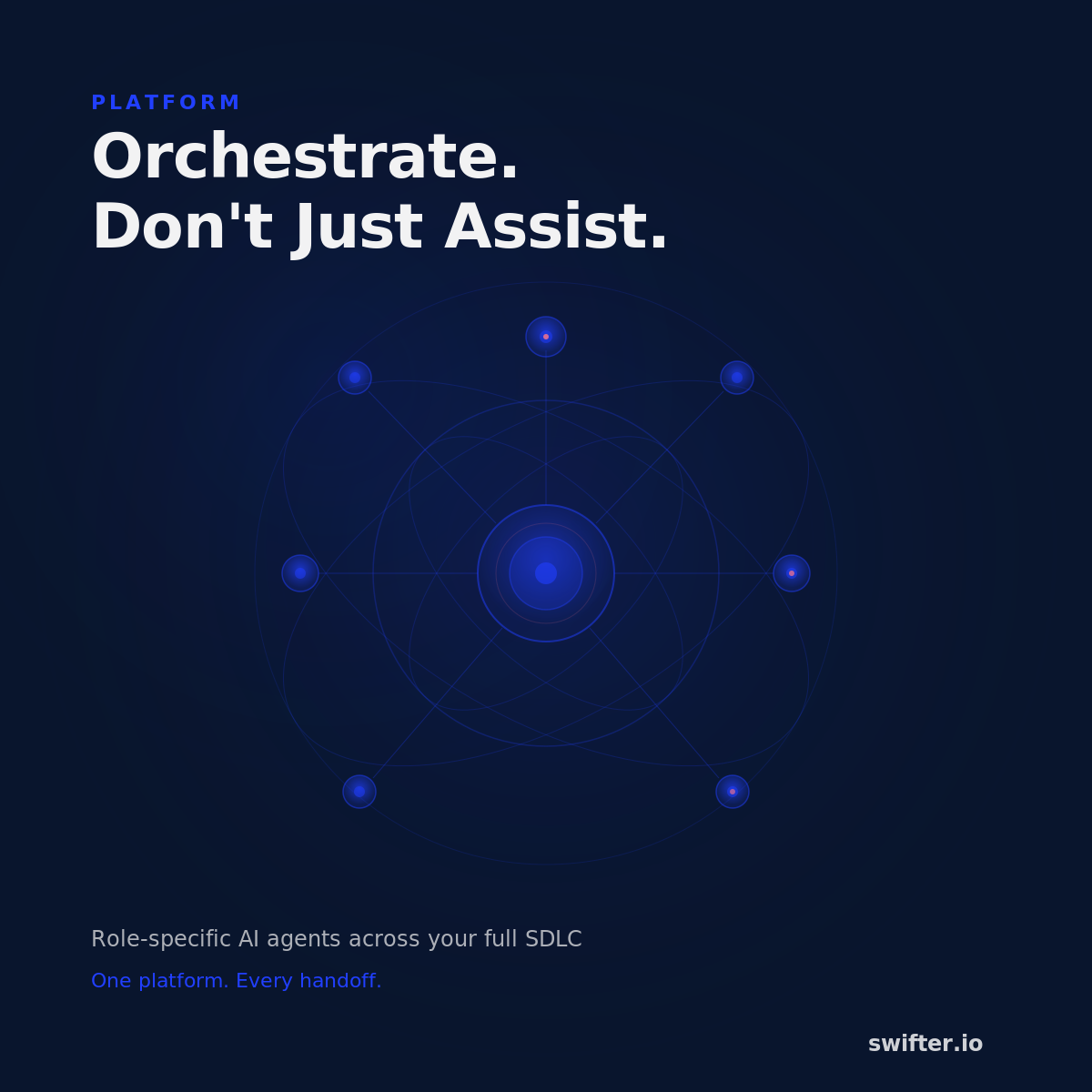
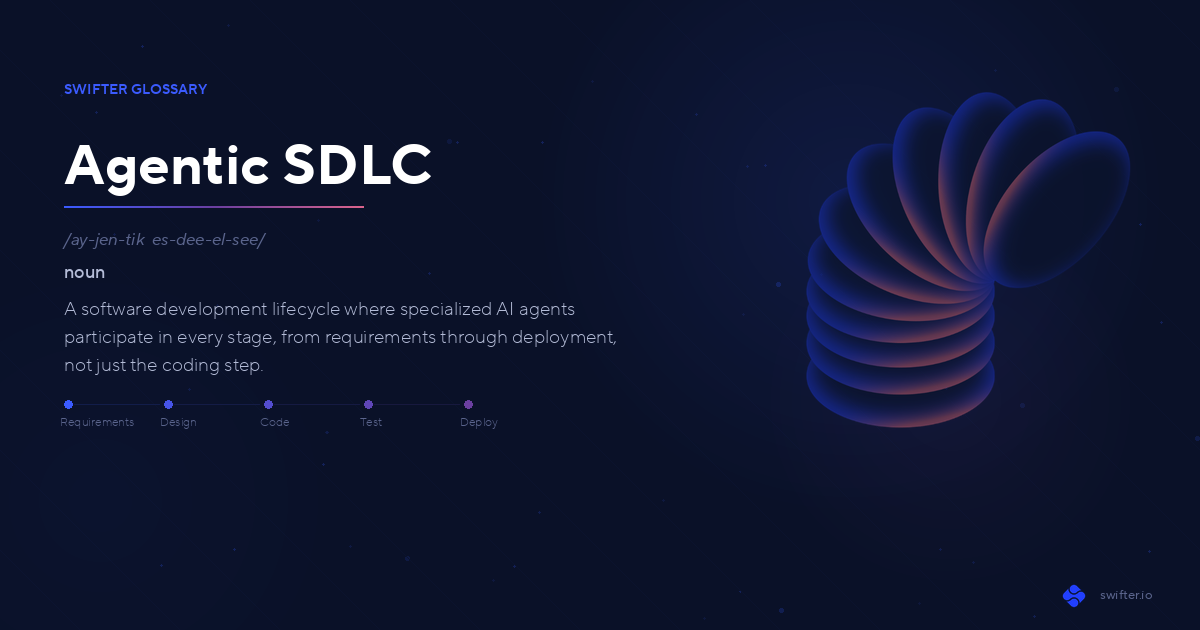
Swifter provides AI governance as a platform capability, not an afterthought. Every AI agent in the Agentic Engine follows pre-tested workflows with full traceability, from the business requirement that triggered the work to the code that was delivered.
Developers keep using the AI tools they prefer (code assistants, IDE plugins). Swifter governs the workflow around them: consistent processes, enforced standards, and a complete audit trail across your full SDLC.
Want to see AI governance in practice? Read the Shadow AI whitepaper to understand the full risk picture, or book a demo to see Swifter's governance platform live.



.svg)

.svg)
.svg)


